

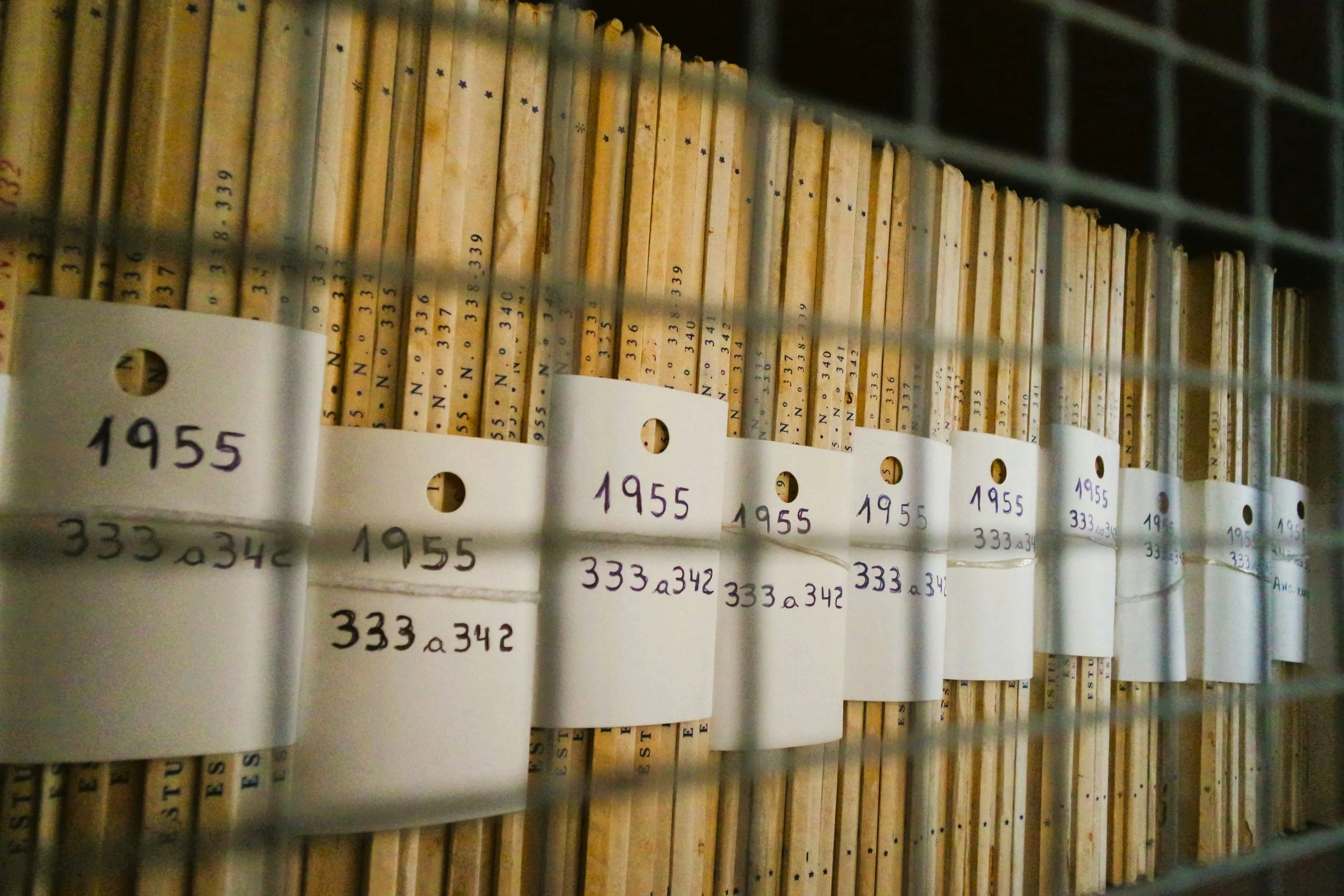


To establish context when performing arrangement, archivists start with an understanding of the overall body that produced the records. Archivists keep evidential and information values in mind to create a scheme that protects both. As part of archival collections management, they also think about audiences, as archives usually have more than one.
The Effect of Technology on Archival Activities
Technology’s Impact on Archives
The Process of Accessioning in Archives
Collection Analysis for Archives—Thought Starters
Archivists: Neutral or Active?
Archival Collection Policies: Writing the Best One for Your Needs
Introduction to Archives
The records that you generate and collect in the course of your life or business are of immediate value to you in conducting your day-to-day business. After activities end, related records serve as evidence of your activities. Maintaining records in a consistent, organized way helps preserve them and makes them accessible for future users. These records of enduring value are your archives.
Archival Appraisal of Architectural Records
Since photography’s conception at a time when buildings were a frequent subject for the lens, photographic documentation has been instrumental in raising awareness of our architectural heritage from the ancient to the modern, urban to remote, grand to vernacular.
Viewers usually engage with the world’s great monuments through images and plans, which act as representations of the architecture itself. Rather than neutral reproductions of the past, architectural records are visual constructions with historical, aesthetic, and cultural frames of reference and connotations that evolve in response to changing contexts.
Accession Considerations for Photographs
Photographs are a wonderful asset for archival repositories because of their broad appeal. The range of users for visual materials—including artists, designers, publishers, and producers—is wider than for textual records. Accommodating all these users can be a challenge, especially if they have unreasonable deadlines and expectations.


