Hanukkah commemorates the victory of the Maccabees, a group of Jewish freedom fighters, over the Syrian Greek army. Although they were outnumbered, the Maccabees were able to retake the Holy Temple in Jerusalem. They gathered together in the temple to read the Torah, but there was only enough lamp oil to last a day. The lantern burned for eight nights, and they saw this as a sign of God. Hanukkah is celebrated to keep the memory of this miracle alive and also to honor the heroic feat of the Maccabees.
Families gather together to celebrate the Festival of Lights because it brings warmth, hope, and coziness to our lives. Hanukkah is traditionally celebrated by lighting the menorah, playing dreidel, and eating foods like latkes, or potato pancakes. Chocolate gelt, a candy that gets its name from the Yiddish word for money, is another popular treat.
Hanukkah candles are lit as dusk is falls. Their flame serves as a beacon in the night. No matter how dark it seems, a single candle can light the way.
As each successive candle of the menorah is lit, the flickering flames assure us never be afraid to stand up for what's right. The Maccabees faced daunting odds, but won. All you need is a little faith.
Download my 40 Family Hanukkah Questions to start documenting your favorite family stories about the holiday. What are your most loved traditions? How has your family celebrated these eight days of togetherness over the years?
Many families exchange gifts each night throughout the holiday. I'm always curious to know each family's gift giving practices. Do they get the big gift on the first night? Is there a slow and steady build up to that last night? Is the gift giving like a bell curve, with the most important gift given on the fourth or fifth day? Is it completely random? I'd love to know your gift giving practices!
To learn the preservation secrets used by libraries, archives, and museums to protect their priceless materials (that you can also use for your family heritage items) read my book:
Ready to get started creating your family archives? Here are some of my favorite products:
Here's a list of distinctive gifts for everyone on your nice list. The ties that bind these gifts together is that they cherish the past or create the future.

A gift that celebrates memories is so much more than a present. An occasion for gift giving--the holidays, a birthday, an anniversary--is all about the experience. And everything's better when you enjoy it together.
Here's a list of distinctive gifts for everyone on your nice list. The ties that bind these gifts together is that they cherish the past or create the future.

In my book, Creating Family Archives: A Step-by-Step Guide for Saving Your Memories for Future Generations, I discuss the techniques that archivists use to protect historical materials from the ravages of time. I find that it's also helpful to discuss what can cause damage to your archival items too. Many hazards are obvious, but others may surprise non-professionals.

A gift that celebrates memories is so much more than a present. An occasion for gift giving--the holidays, a birthday, an anniversary--is all about the experience. And everything's better when you enjoy it together.
Here's a list of distinctive gifts for everyone on your nice list. The ties that bind these gifts together is that they cherish the past or create the future.

Two fundamental digital preservation strategies are refreshment and migration. These strategies are designed to preserve the integrity of digital items and to enable you to retrieve, display, and use them despite changing technology.

An acute preservation challenge lies in saving digital items. Technology enables us to create, use, and be enriched by information in ways that were unthinkable generations ago. But the same advances that make sharing information so easy also pose some problems. The complexity and diversity of technology is overwhelming, even as storage capacity becomes cheaper. The volume of digital data, unstable storage media, and obsolete hardware and software make the usability of digital items a challenge.

If you are the keeper of family history items that you believe could be of interest to scholars, you may wish to donate them to an institution where they will be archived and available for others to use.

As you reflect on your life, what moments or thoughts would you like to save? What about some of your family members? Wouldn’t you like to record their opinions on their lives?
Open-ending questions about people’s life experiences yield surprising results. Use these questions to record your thoughts, or start a conversation with a relative. When possible, record the interview on audio or video.

I was recently interviewed on The Life Story Coach podcast about my book, Creating Family Archives: A Step-by-Step Guide for Saving Your Memories for Future Generations.
Hosted by Amy Woods Butler, a personal historian and life story writer, The Life Story Coach helps listeners build careers as professional writers of personal and family histories.

I've crafted a travel memory workbook with 30 questions to capture family memories about their travels. The questions are crafted to give you more than yes or no answers and are tailored to uncover information about your loved ones. You can ask family members about their favorite trips, or use it yourself to write the next Eat, Pray, Love.

In your collections, you will often come across photographs in a format that you cannot identify. These are primarily early photographs. By understanding the type of photograph you have, you can begin to learn when or why it was taken. Knowing the format is also helpful in finding out the best way to preserve the images.
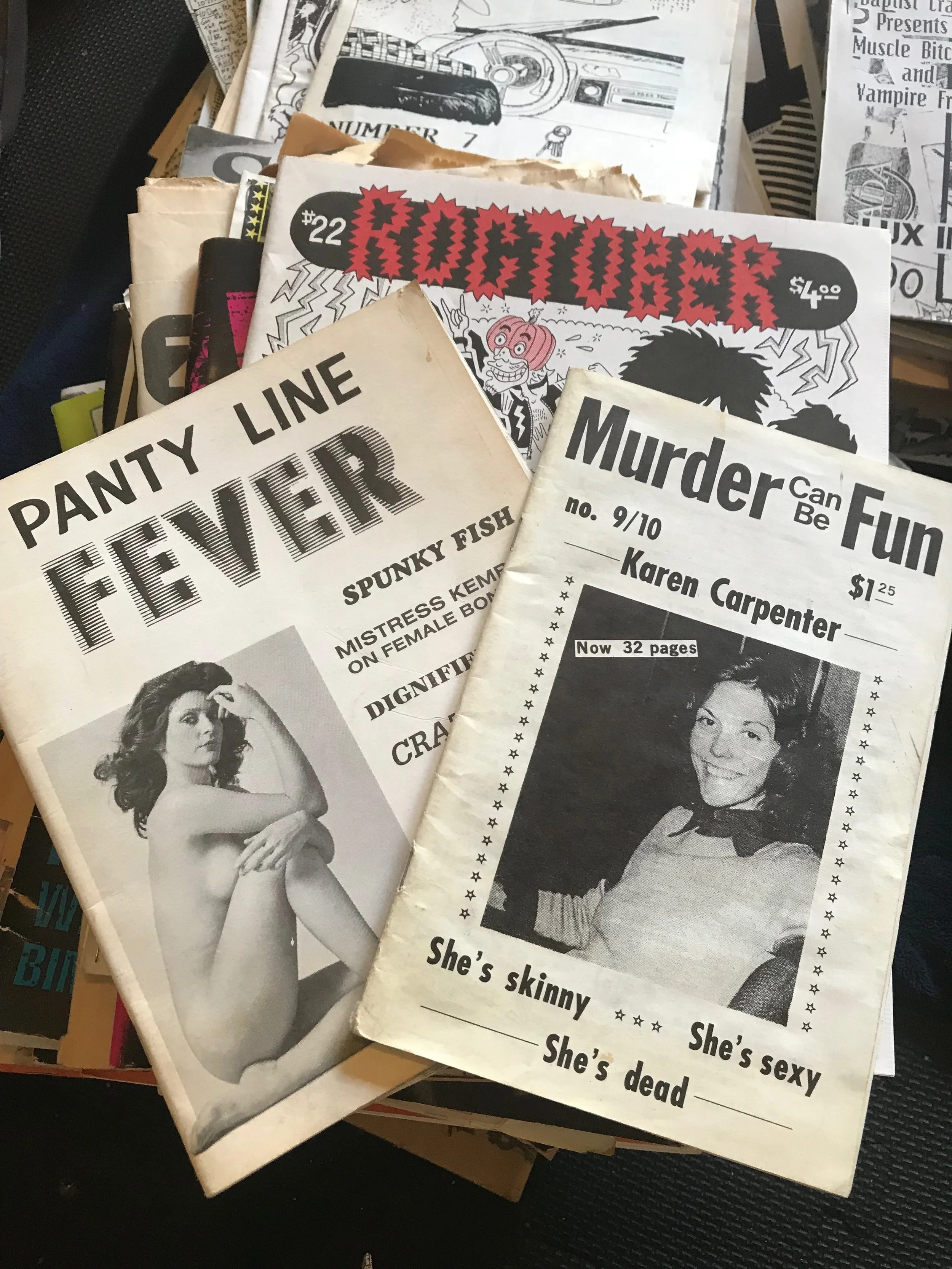
A zine (short for magazine or fanzine) is a small-circulation, self-published work. Zines come in a variety of styles: photocopied, printed on cheap paper, or professionally printed. They could and were about any topic imaginable. My favorites were the punk and true crime-related ones. Extreme Noise in Minneapolis had a free zine bin that I happily dig through every time I visited and I'd leave with the most interesting ones. Zines were particularly popular in the mid- to late-1990s, and were later replaced by blogs and social media.

I've created a guide of 40 Family Christmas Questions so you can share your memories with your loved ones. This time of year provokes so many emotions of yesteryear, while also letting you think about the new year.
Families gather together to celebrate the Festival of Lights because it brings warmth, hope, and coziness to our lives. Hanukkah is traditionally celebrated by lighting the menorah, playing dreidel, and eating foods like latkes, or potato pancakes. Chocolate gelt, a candy that gets its name from the Yiddish word for money, is another popular treat.

As Thanksgiving and the holidays approach, I wanted to create a 40-question guide that could capture these special food-related memories. I crafted a list of questions to record as much information about a favorite family recipe as possible. As you gather together over a meal, take a moment to ask about the nuances of your favorite dishes.

I often think about how I stumbled into my profession. Becoming an archivist wasn't calculated but something that I moved towards inadvertently. I started my first archives project before I knew what an archivist was.
The project was preserving my husband‘s band flyers.

To celebrate Halloween, I'm offering my readers a treat.
I've created an oral history kit with over 50 questions to capture family memories about All Hallows' Eve. The questions are crafted to give you more than a yes or no answer and tailored to uncover information about your loved ones.

One of the most common questions I receive from people learning how to create their family archives is what supplies to buy. I've curated a collection of the best, most affordable, and most useful archival products that every home archivist should invest in.

I was recently interviewed on the Genealogy Happy Hour podcast about my book, Creating Family Archives: A Step-by-Step Guide for Saving Your Memories for Future Generations. Considering that I just got back from a red eye flight from Portland, Oregon for the annual conference of the Society of American Archivists, I think I did pretty good!

Whether written, spoken into a voice recorder, or recounted to the lens of a video camera, your stories are awaited by the most appreciative audience of all—your family. Far into the future, your family will read your words or listen to your voice and be grateful you took this time to put this gift together for them.

“I wish I'd asked Dad while he was around.”
Far too often, my clients tell me that they regret not interviewing their father about his life story as they create their family archives.
For this Father’s Day, why not conduct an oral history interview of your father? You’ll not only create a memory, but you will capture stories for the next generation

This Mother’s Day, make your family history project all about your mother by conducting an oral history interview designed for her. Capturing her story is an important part of documenting your family history and one you don’t want to miss before it’s too late.

I was given a Polaroid camera when I was a teenager that I loved. I liked the look of the photos and the ability to have photos developed instantly. In the course of creating my family archives, I found many of those old photographs and wondered what was the best way to preserve them.

When you are creating your family archives, you will most likely have to rehouse your family treasures in suitable storage containers, such as folders, enclosures, and boxes. These items are often described as “archival” or “archival quality” by their manufacturers, but these terms convey no specifics about their preservation use.

An essential part of your family heritage is in danger of being lost, and yet few are aware of it.
Most of us have family albums in our possession. They are a wonderful way to reconnect with the past. You would think that storing photos in albums would be the safest way to protect them.

Many of us organize a lifelong collection of personal papers and photos either when we have free time, such as in retirement, or when we have to deal with the belongings of a someone who has passed away. Often the project seems daunting because we don’t know where to begin.
Once you jump over that mental hurdle, you will be amazed at what you discover.

It may seem as though you wouldn’t have to worry about copyright issues when you are creating family history projects. If you have original diaries, photos, and letters in your possession, you might also think that you own the rights to them, especially if they are old. However, even though you may own the physical materials, the author of the documents retains their legal copyright, sometimes for much longer than you would assume.

Finding out the authorship and date of a document or a letter may be essential to organizing it among your documents or understanding how it fits within a grouping.

I realized that although my focus has been to protect the past, we should do a better job preserving the present for the future.
Here's a list of distinctive gifts for everyone on your nice list. The ties that bind these gifts together is that they cherish the past or create the future.