



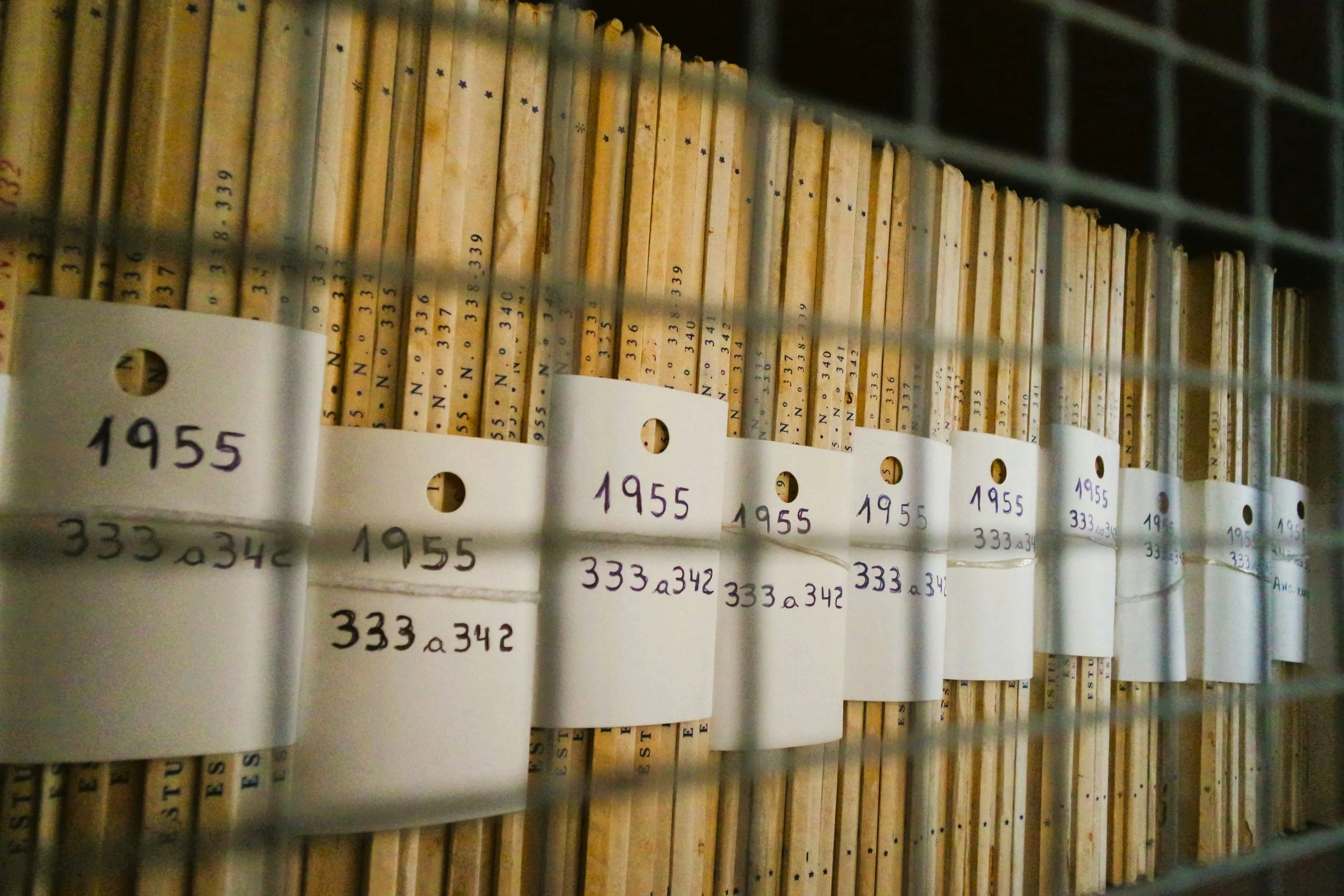

American Archives Month is a time to focus on the importance of records of enduring value and to enhance public recognition for the people and programs that are responsible for maintaining our communities’ vital historical records.
Archivists often find themselves explaining the value of their work to administrators, funders, and the public. Stories about unique discoveries or heartwarming encounters with collections have their place, but when it comes to advocacy and decision-making, data provides a stronger foundation. Numbers create credibility, offering concrete evidence of outcomes rather than subjective impressions.
Archivists build archives to endure. Unlike many other institutional functions, their mission spans generations.
Society is increasingly treating cultural heritage as a commodity. Archives face broader economic forces that reduce cultural materials to objects for consumption and exploitation. This commodification risks reframing archives as curiosities with market value rather than repositories of cultural heritage that serve the public good. Institutions once preserved records to document the past, but market forces might now recast them as investments.
Archives often find themselves competing for limited resources within larger institutions. Universities prioritize teaching and research, nonprofits focus on programs and services, and corporations channel funds toward revenue-generating initiatives.
With shrinking resources and increasing demands, archivists cannot afford to view budgeting as an afterthought. A carefully developed budget is a strategic tool that connects an archives’ mission to its daily operations. It demonstrates accountability, supports advocacy efforts, and provides a framework for decision-making.